Course-aware context
Grounds support in approved course structure, materials, role, and workflow rather than generic model knowledge alone.
Flagship AI product
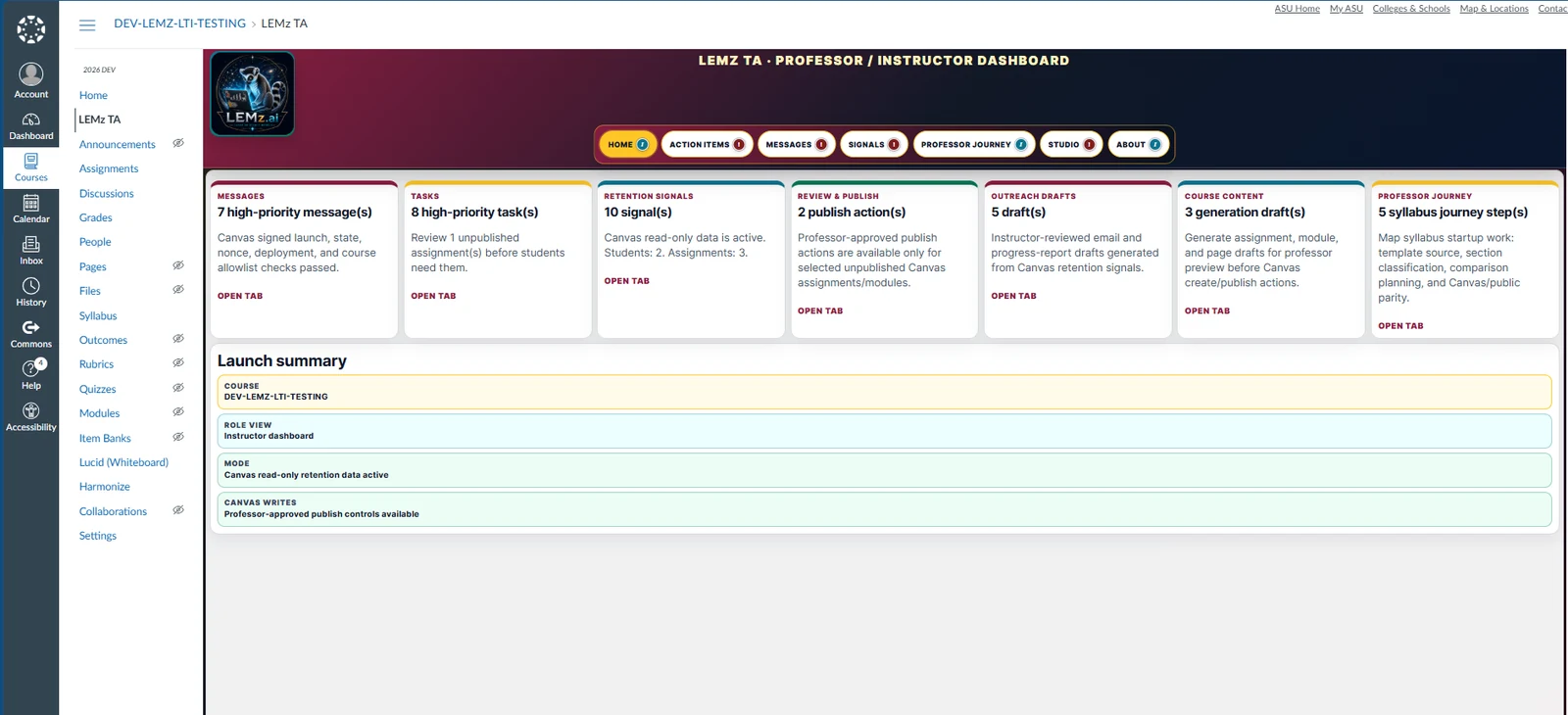
LEMz TA is a course-aware AI teaching-assistant platform for universities, faculty, students, instructional designers, academic technology teams, and enterprise IT leaders.
Operational in controlled Canvas test-course environments.
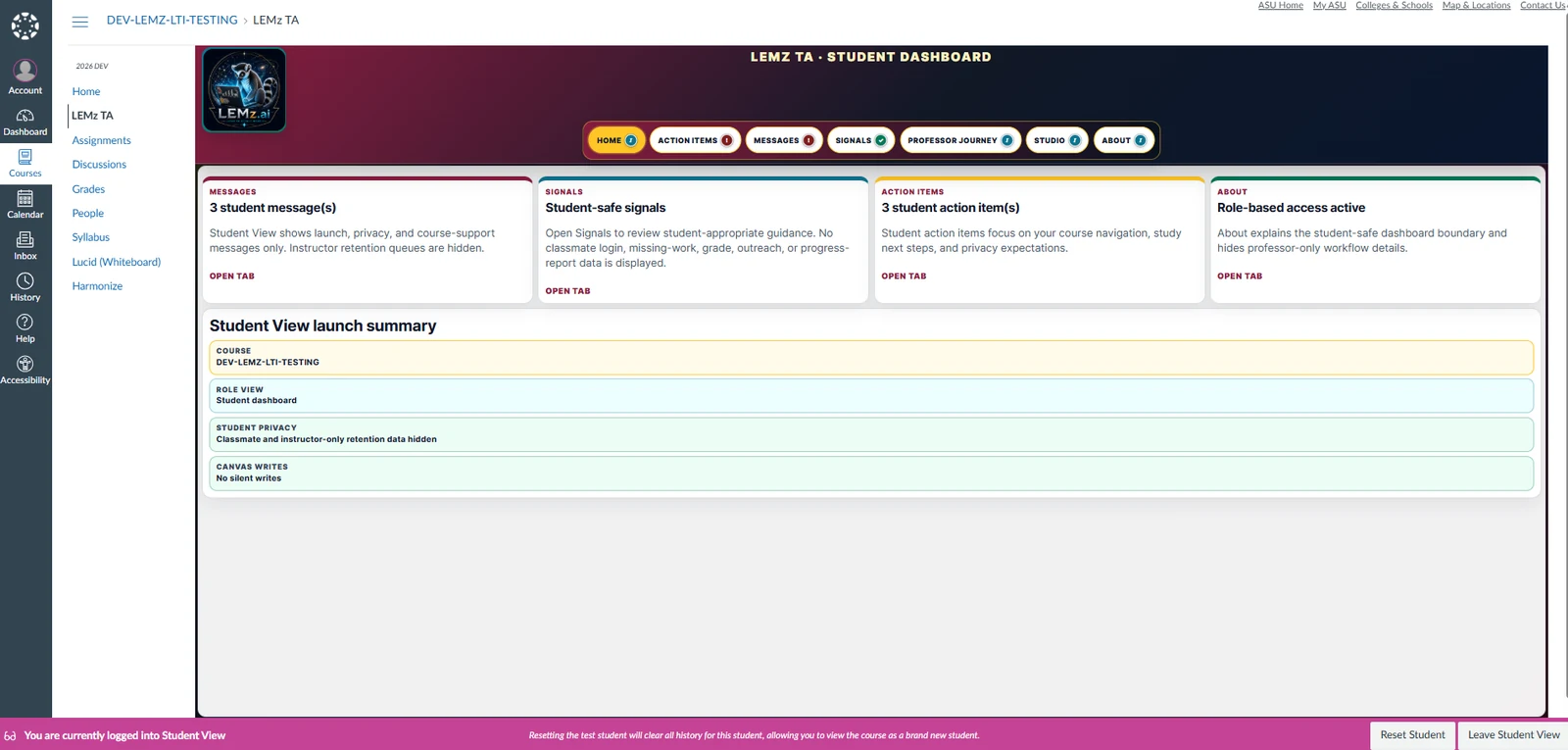
Role-aware launch for instructors and students inside the LMS.
Institutional deployment preparation through the ASU relationship.
No silent publishing, student contact, or consequential LMS writes.
LEMz TA
The product addresses a specific institutional problem: generic AI chat tools are disconnected from course context, professor workflow, role permissions, and accountable authorization.
LEMz TA brings AI support into the course environment, maintains approved context, presents role-appropriate guidance, and separates technical access from authority to act.
Grounds support in approved course structure, materials, role, and workflow rather than generic model knowledge alone.
Provides distinct role-safe experiences, including professor workflows and student-safe messages, signals, and action items.
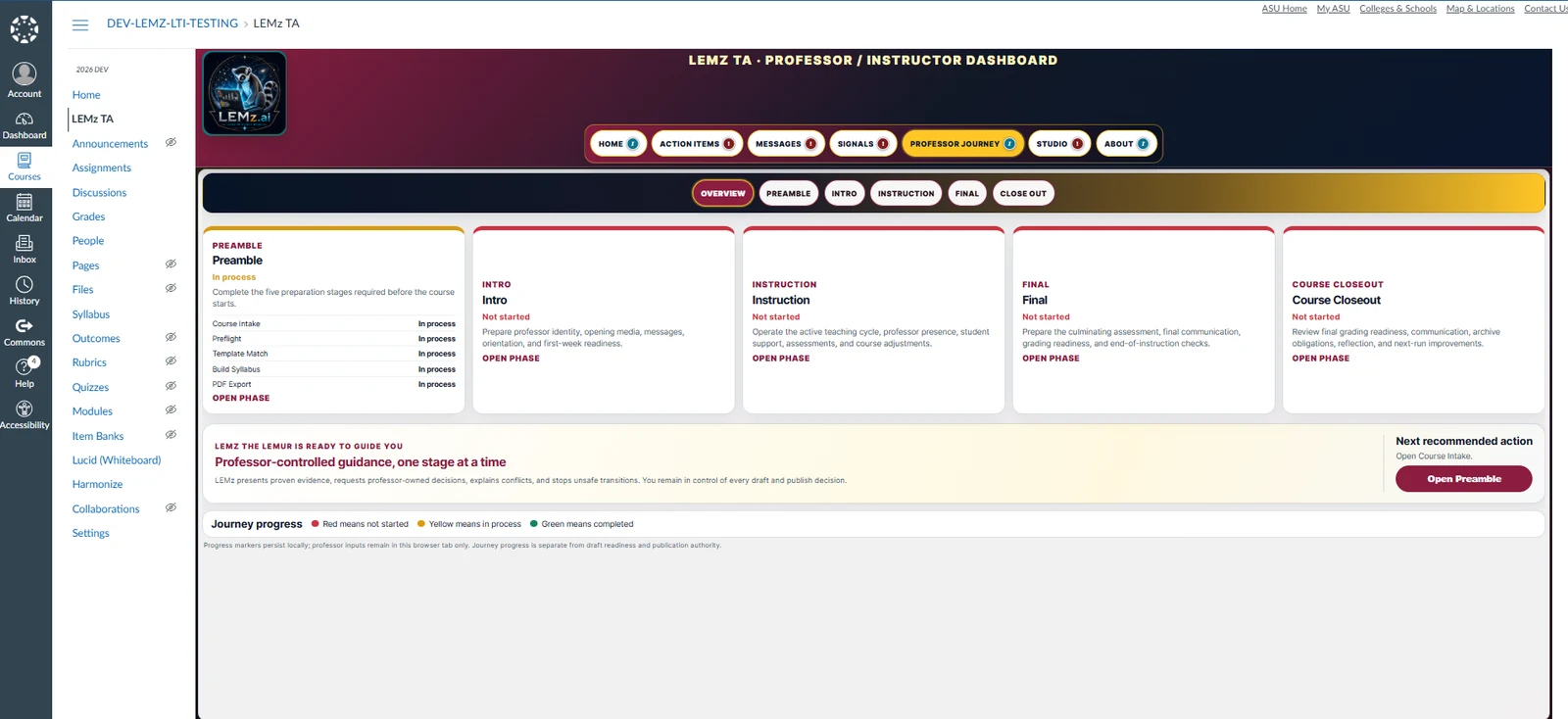
Organizes course preparation and delivery across Preamble, Intro, Instruction, Final, and Close Out phases.
Supports recommendations and drafts while preserving professor confirmation before consequential LMS action.
Surfaces role, mode, data posture, and Canvas write status instead of hiding them behind the interface.
Designed for observability, elastic demand, model portability, and controlled institutional growth.
Current product evidence
Captured July 31, 2026 in controlled Canvas test-course environments. The interface remains under active development and may change as testing and institutional requirements evolve.